Champion Mindset
|
⚡June Promo: 1h Strategy Session — €50 instead of €75 (33% off)
Back to Blog
Health & Performance•March 22, 2026

How Common Nutrient Deficiencies Affect Mindset & Performance

N

Nicky Defraeye

Champion Mindset Coach

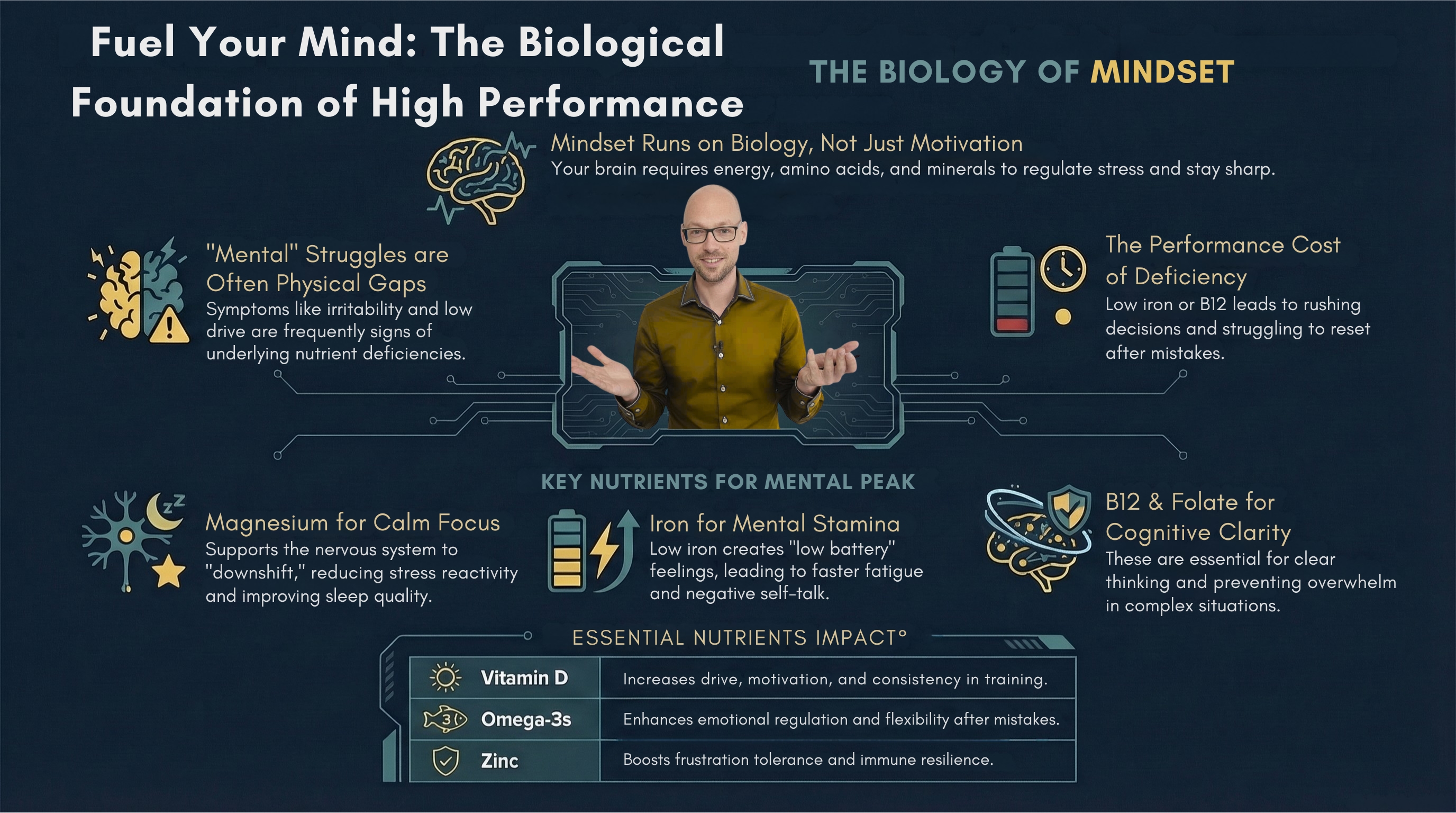
The Biology of Mindset - Nutrition and mindset performance connection

Most people treat mindset like it lives only in the head.

They train focus like it's a purely mental muscle. They try to "think positive," breathe through pressure, set better goals, build routines.

And all of that matters.

But here's the part many athletes and high-performers miss: your mindset doesn't run on motivation. It runs on biology.

Your brain is an organ. It needs raw materials: energy, amino acids, fats, vitamins, minerals, to stay sharp, regulate stress, and recover. When those basics are missing, the symptoms often look "mental":

  • •Brain fog
  • •Low focus
  • •Irritability
  • •Anxiety
  • •Low drive
  • •Poor sleep
  • •Slower decision-making

So you don't just feel off: you start performing off. And then you blame your discipline, your confidence, or your character.

This article is a practical bridge between holistic health and performance mindset: common deficiencies, what they can look like in daily life, and how they may show up as "mental" problems in sport, work, and health goals.

A quick note before we start

Symptoms overlap. A low mood, low focus, or anxiety can have many causes (sleep, stress load, training volume, medication, gut health, thyroid, etc.). Use this as a checklist for smarter self-observation and for conversations with a qualified professional, not as a diagnosis.

1) Iron (and ferritin): energy, drive, and resilience

If iron is low, your body and brain often feel like they're running on low battery.

You might notice:

fatigue, getting out of breath faster, cold hands/feet, restless legs, poor recovery.

Mindset/performance impact:

  • •Less mental stamina (you "run out" faster)
  • •More negative self-talk because everything feels heavier
  • •Less patience under pressure

Sport example: In billiards or darts, you may rush decisions, get irritated quicker, and struggle to reset after a mistake.

2) Vitamin B12 + folate: clarity and nervous system support

These nutrients are strongly linked to how "clear" you feel.

You might notice:

brain fog, low mood, memory issues, low energy.

Mindset/performance impact:

  • •Slower decision-making
  • •More overwhelm in complex situations
  • •That feeling of "I'm off today" even when your technique is fine

3) Vitamin D: mood, motivation, and consistency

Vitamin D is one of the most common low markers: especially in winter or when you're indoors a lot.

You might notice:

low mood, low motivation, more frequent illness.

Mindset/performance impact:

  • •Less drive to train consistently
  • •More "why bother?" thoughts during setbacks
  • •Harder to stay optimistic and disciplined

4) Magnesium: calm focus and better sleep

Magnesium is often connected to how well your nervous system can downshift.

You might notice:

tension, cramps/twitches, poor sleep, irritability.

Mindset/performance impact:

  • •More stress reactivity (small triggers feel big)
  • •Harder to access calm focus
  • •Sleep disruption → less emotional control the next day

5) Omega-3s: emotional regulation and mental flexibility

Omega-3s support the brain's ability to stay flexible instead of stuck.

You might notice:

low mood, more inflammation/stiffness, poor recovery.

Mindset/performance impact:

  • •More rumination after mistakes
  • •Less ability to zoom out and reframe
  • •More emotional swings under pressure

6) Zinc: stress tolerance and immune resilience

Zinc is a small mineral with a big impact on resilience.

You might notice:

frequent colds, slow healing, low appetite, skin issues.

Mindset/performance impact:

  • •More fatigue and lower frustration tolerance
  • •More interruptions in training because you get sick more easily

7) Iodine + selenium: steady energy (thyroid support)

These nutrients support thyroid function, which influences energy and drive.

You might notice:

low energy, feeling cold often, "flat" motivation.

Mindset/performance impact:

  • •Slower mental pace
  • •Less initiative
  • •More self-doubt because you feel less capable

8) Protein (and enough total food): stable mood and recovery

If you're under-eating (even unintentionally), mindset work becomes harder.

You might notice:

cravings, poor recovery, sleep issues, mood swings.

Mindset/performance impact:

  • •More emotional volatility (often linked to blood sugar swings)
  • •Less discipline because the body is in "survival mode"
  • •Reduced confidence because training feels harder than usual

How to use this in a mindset + health approach

1) Translate symptoms into performance language

Instead of "I can't focus," ask:

  • •When does focus drop (start, middle, end of session)?
  • •What's the pattern with sleep, meals, hydration, stress, and training load?
  • •Is it worse under pressure or even in relaxed practice?

2) Build a simple self-observation routine

  • •Rate energy, mood, focus, and recovery daily (1–10)
  • •Note training quality and stress events
  • •Track meals and sleep windows (not perfection — patterns)

3) Combine physiology with a mental reset tool

When the body is strained, keep mindset tools short and repeatable:

  • •A 3-breath reset
  • •A single cue word ("calm," "smooth," "trust")
  • •A quick reframe: "My job is process, not outcome."

The case for a yearly health analysis

Here's what most athletes and high-performers don't do: they don't get a baseline.

You track your training. You track your competition results. You track your sleep and maybe your nutrition.

But if your focus is inconsistent, your mood is lower than usual, or your recovery feels slow… it helps to check the basics once a year.

A yearly blood analysis isn't just for general health: it's a mind + performance tool.

Why it matters:

  • •It turns vague symptoms into something concrete
  • •It helps you catch problems early (before they become big)
  • •It gives you a personal baseline to compare year after year

Simple way to think about it:

If your mindset feels "heavy," check the body.

If your performance is inconsistent, check the basics.

Final thought

Mindset is a skill, but it's also a state. If you want consistent performance, you need both: the mental tools and the physical foundations that make those tools accessible.

N

About Nicky Defraeye

Certified Methode Target coach, licensed fitness trainer, nutritionist, and founder of Champion Mindset Coaching. Helping athletes and high-performers unlock their full potential through proven mindset techniques and holistic health integration.

Book a Free Discovery Call